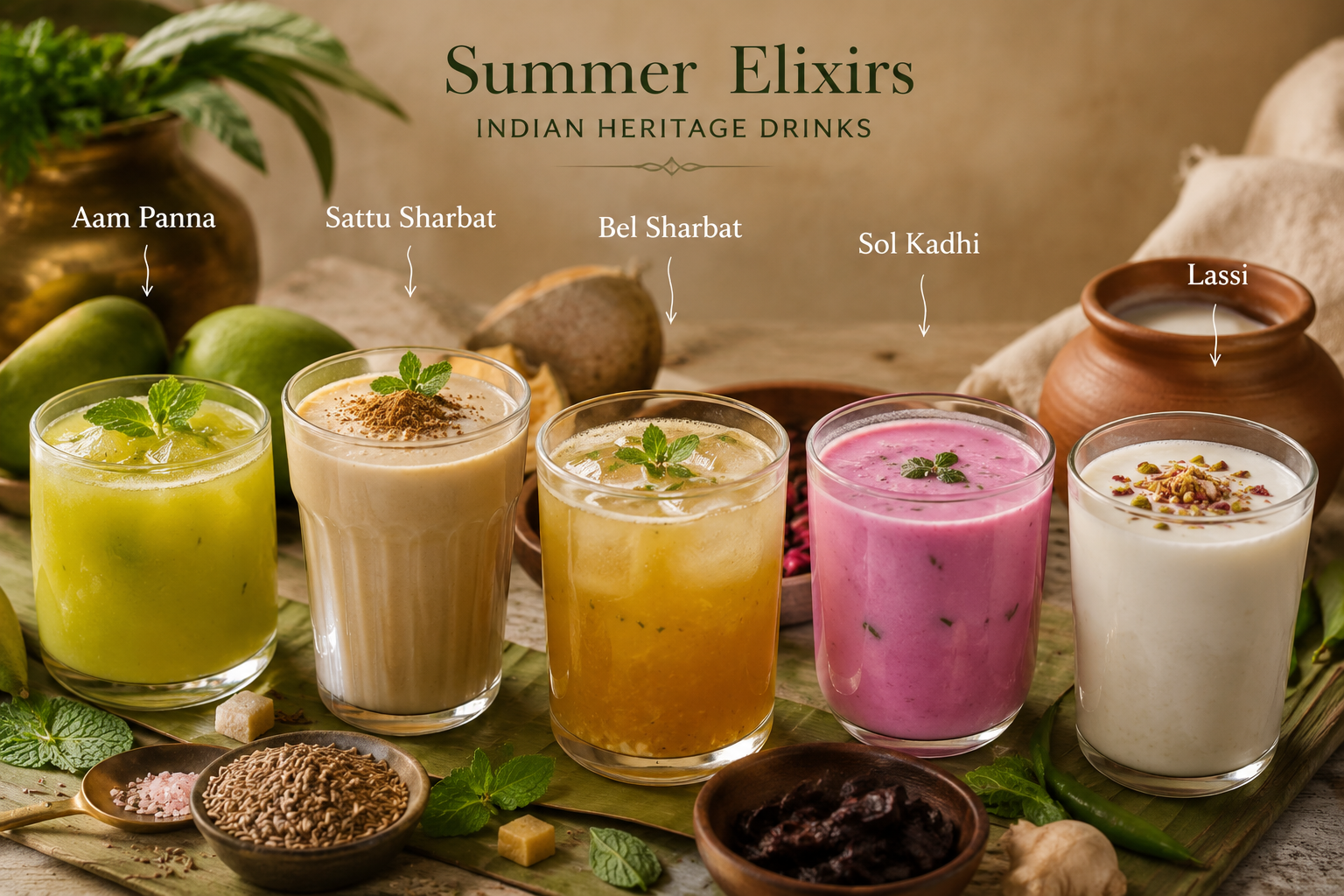
Beyond Thirst-Quenchers – The Rise of “Functional Hydration”
In 2026, “hydration” stopped meaning a colorless electrolyte bottle. The global consumer, burned out on synthetic sodas and sugar crashes, is reaching for something older, wiser, and shockingly effective: Indian summer drinks 2026. We’re calling them “Summer Elixirs” because they were never designed just to quench their thirst.
For millennia, Indian kitchens have brewed Ayurvedic cooling elixirs to do three jobs at once that is lower core body temperature, repopulate the gut, and restore electrolytes lost to the subcontinent’s brutal heat. That trinity is now the holy grail of functional ethnic beverages. Market data shows a decisive pivot. After the 2024 clean-label backlash against artificial sweeteners, RTD beverage sales in the U.S. and EU saw a 5.7% CAGR in ethnic, herb-forward drinks, while legacy cola brands contracted 2.1%.
The 2026 consumer doesn’t want “less bad”, They want “actively good”, They want heat-stress mitigation from raw mango, L-theanine-like calm from bel, and probiotic diversity that makes Greek yogurt look one-dimensional. This is Ritucharya, Ayurveda’s code of seasonal living, industrialized, glass-bottled, and shipped worldwide. Indian Summer drinks aren’t trending,they’re replacing.
The Ancient History & Ayurveda: Ritucharya in a Glass
Ritucharya: Eating with the Seasons Since 600 BCE
Ayurveda doesn’t do “one-size-fits-all.” Ritucharya, or seasonal regimes, divides the year into six ritus, each with dietary prescriptions to balance doshas. Grishma Ritu, or peak summer, aggravates heat, sharpness, inflammation. The antidote isn’t ice water, which Ayurveda says dampens agni or digestive fire. It’s cooling, unctuous, sweet-sour liquids that hydrate while kindling metabolism.
From Kanji to Takra: Fermentation as Medicine
Texts and ethnobiology studies detail how summer regimes relied on fermented Indian summer drinks. Kanji, a black carrot and mustard ferment, was brewed in March to be ready for April’s heat, a probiotic tonic loaded with Lactobacillus to preempt summer dysentery. Takra, the ancient name for spiced buttermilk, was prescribed daily in Grishma to “extinguish the inner fire.” Peya, a thin rice gruel, rehydrated farmers with fast-digesting carbs and salt.
Even Kerala’s Karkidaka Kanji, a monsoon detox porridge, shows the pattern: food as timed, targeted therapy. These weren’t recipes. They were clean label drinks India perfected before labels existed every ingredient functional, every step seasonal.
Matcha has become one of the most influential wellness beverages worldwide. Explore the latest Matcha Trends and discover why consumers are shifting toward clean energy drinks.
The “Big Five” Types & Recipes: 2026 Adaptogenic Upgrades
The Indian summer drinks market cap is expanding because these five formats hit every 2026 demand: gut health, clean energy, electrolyte balance, and Instagrammable color.
1. Aam Panna: The Antidote to Heatstroke
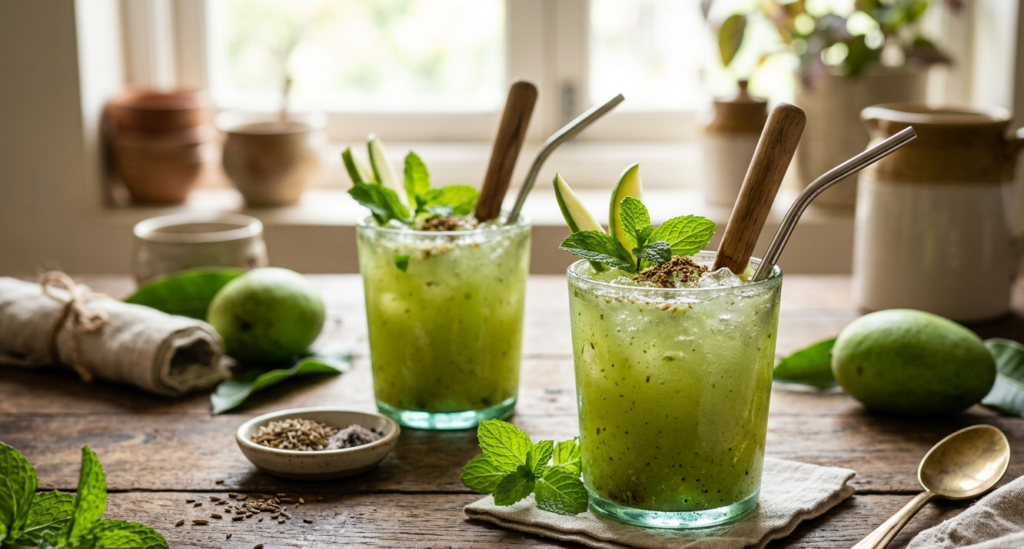
Sensory Writing:
Tart green mango slams the palate first, then raw sugar rounds it, then roasted cumin unfurls smoky and grounding. It’s lemonade’s wiser, older cousin.
Recipe – Adaptogenic Aam Panna
- 2 raw green mangoes, boiled and pulped
- 3 tbsp jaggery powder or monk fruit
- 1 tsp roasted cumin powder
- ½ tsp black salt + ¼ tsp Himalayan pink salt
- 300mg ashwagandha extract for heat-stress mitigation
- Mint, water, ice
Why it dominates:
High in pectin, Vit C, and electrolytes. Clinical notes cite Aam Panna health benefits for preventing sodium loss during heat waves. The 2026 twist: adaptogens turn it from rehydrator to resilience tonic and considered one the best Indian Summer Drinks
2. Sattu Sharbat: The Desi Protein Shake
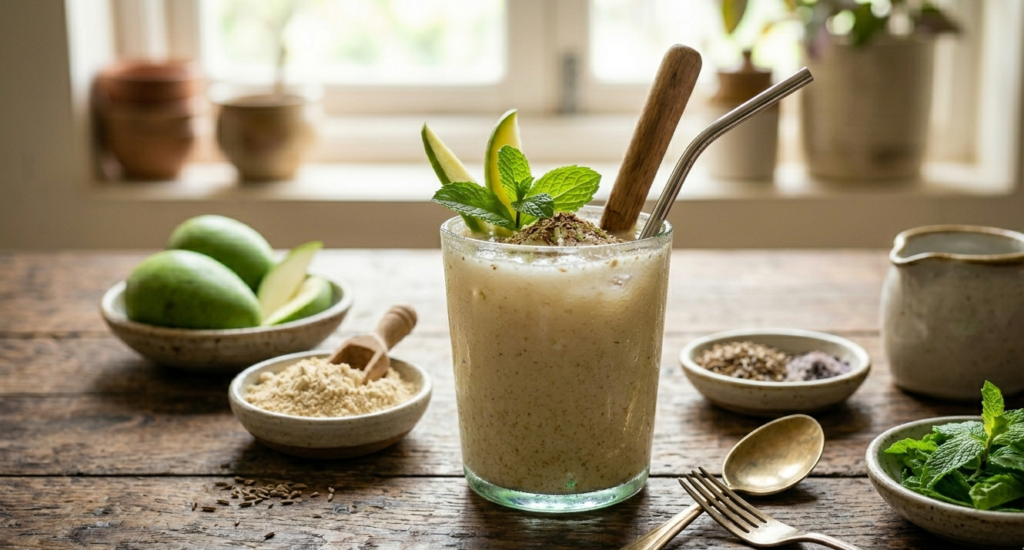
Sensory Writing:
Earthy, nutty, like a roasted chickpea latte. Cold, thick, and shockingly savory-sweet.
Recipe – Performance Sattu
- 3 tbsp roasted chana sattu powder
- 1 tsp barley grass powder
- Juice of 1 lemon, black salt, cumin
- 1 tsp soaked chia for fiber
- Optional: 20g unflavored pea protein
Why it’s trending:
Sattu delivers 20g plant protein per 100g, plus insoluble fiber and iron. Global fitness forums now call it the “Desi Protein Shake” because it digests cooler than whey.
3. Bel Sharbat: The Gut-Health Guardian
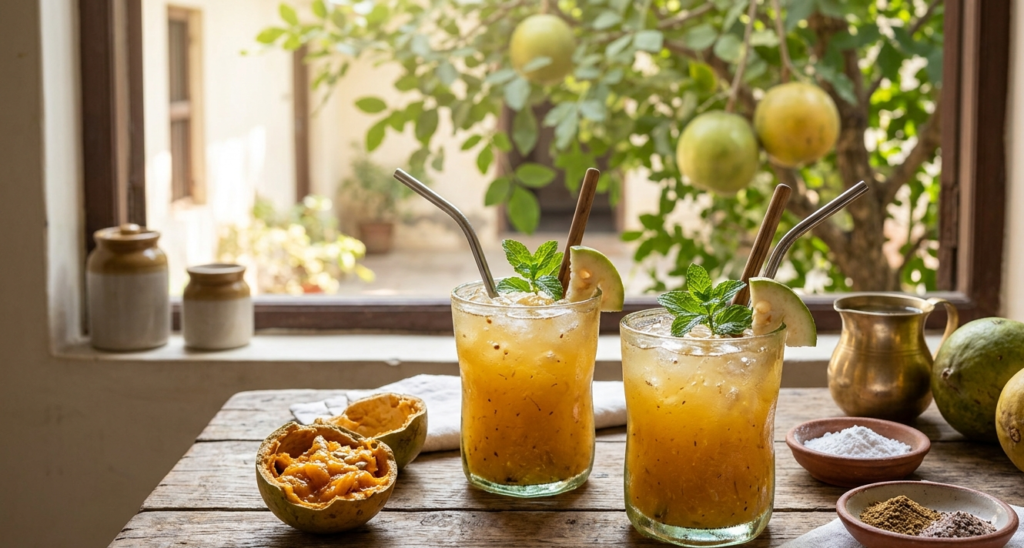
Sensory Writing:
Fragrant, musky, tropical – like a mango crossed with a pear and dusted with temple incense.
Recipe – Prebiotic Bel
- Pulp of 1 ripe wood apple bel
- 2 tbsp soaked basil seeds sabja
- 1 tsp raw honey, pinch of cardamom
- 100ml coconut water for K+ electrolytes
Why it matters:
Bel fruit is mucilaginous, soothing for ulcers and IBS. It contains tannins and marmelosin that act as prebiotics, feeding Bifidobacteria.Bel fruit is mucilaginous, soothing for ulcers and IBS. It contains tannins and marmelosin that act as prebiotics, feeding Bifidobacteria.
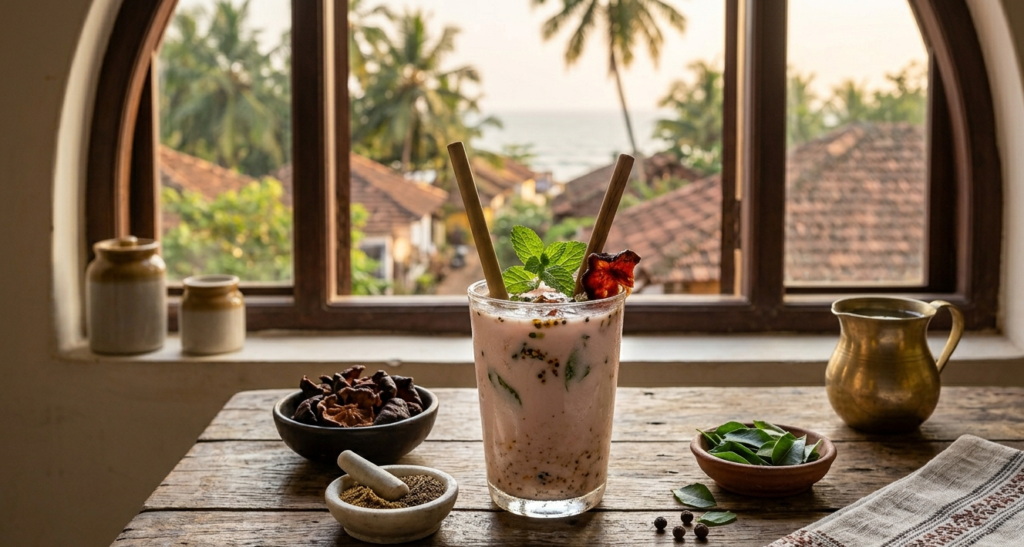
4. Sol Kadhi: The Aesthetic Pink Digestive
Sensory Writing:
Cool coconut milk stained millennial-pink by kokum. Sour, salty, with a whisper of garlic and green chili heat.
Recipe – No-Cook Sol Kadhi
- 1 cup thick coconut milk
- 4-5 soaked kokum petals
- 1 green chili, 2 garlic cloves, crushed
- Salt, chopped coriander
Why it’s viral:
Kokum is rich in Garcinia indica and HCA, studied for lipid metabolism. Plus, it’s the “Aesthetic Pink Digestive” dominating wellness TikTok.
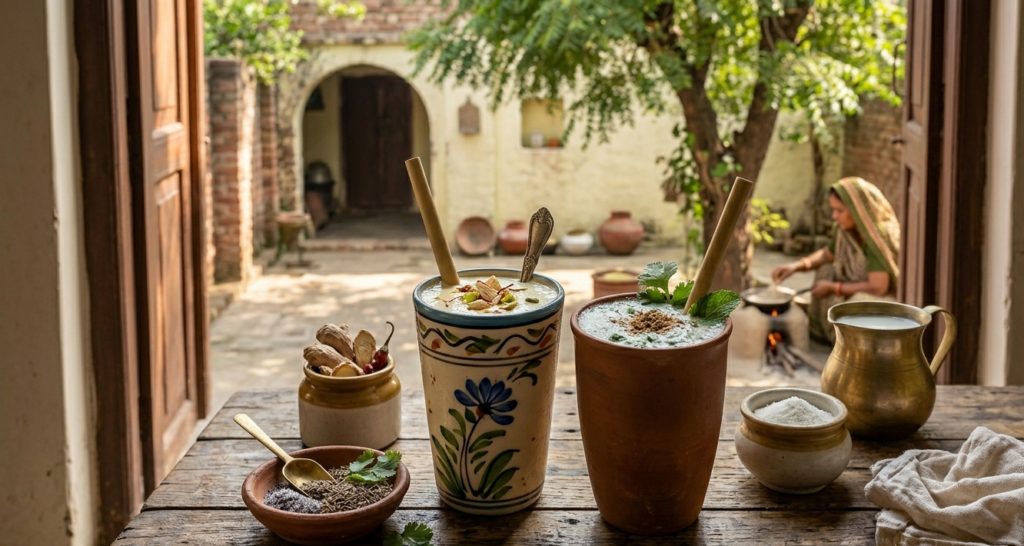
5. Variations of Lassi/Chaas: Lassi vs Kefir
Sensory Writing:
Chaas is feather-light, salty, with curry leaves and hing crackling in ghee. Lassi is dessert-thick, rose-scented, mango-sweet.
2026 Context:
Traditional Takra/Chaas is India’s OG probiotic. A 2019 cultural geography study notes its role in daily diets across Rajasthan and Gujarat. Compared to Greek yogurt, chaas uses mesophilic cultures at room temp, yielding different probiotic strains like L. fermentum. The 2026 upgrade: mango-lassi with L-theanine for calm focus.
2026 Market Analysis: Data Behind the Desi Drink Boom
1. CAGR of 5.7% in Ethnic Functional Drinks
While carbonated soft drinks stagnate, fermented Indian summer drinks and Ayurvedic cooling elixirs are posting a 5.7% CAGR through 2030, driven by Gen Z and millennial demand for “roots-to-bottle” stories.
2. Clean Label Is Non-Negotiable
Capgemini’s – What Matters to Today’s Consumer 2026 report found 73% of shoppers will abandon a brand that isn’t transparent. Indian brands have an advantage: recipes are inherently clean label drinks in India – mango, salt, cumin. No “natural flavors.” This forces a shift toward “Clean Label” transparency, where brands must list every ingredient upfront.
3. The Gut-Brain-Skin Axis
Searches for “drinks for bloating” rose 210% since 2024. Indian elixirs deliver probiotics, polyphenols, and electrolytes in one SKU. That’s why Lassi vs. Kefir is now a real debate in Whole Foods aisles.
From Ayurvedic cooling elixirs to functional herbal infusions, discover the rising global demand for Herbal Tea wellness culture.
Opportunities & Branding: Where the Next Unicorns Will Bottle
1. The RTD Glass-Bottled Gap
Most Indian elixirs are still sold as powders or concentrates. There’s a gap in RTD Glass-Bottled ethnic drinks – cold-chain chaas, nitro sattu, sparkling aam panna. Glass signals premium, preserves probiotic viability, and aligns with plastic backlash.
2. Nostalgia Marketing Wins
Brands like Paper Boat and The Whole Truth scaled by selling childhood, not just drinks. In 2026, the winning play was “Nostalgia Marketing” + lab tests. Show the nani’s recipe, then show the heat-stress mitigation data.
Bullet Opportunities for Founders:
- HPP Aam Panna with QR codes linking to mango farms and ORAC scores.
- Adaptogenic Chaas with ashwagandha, marketed as “Cortisol Cooler.”
- Bel Kombucha – ferment wood apple with SCOBY for East-meets-West fizz.
- Subscription Kanji – 7-day gut reset kits, shipped in January.
-
Are Indian summer drinks vegan-friendly?
Many are. Aam Panna, Bel Sharbat, Sattu Sharbat, and Sol Kadhi are 100% plant-based. Traditional lassi/chaas use dairy, but 2026 brands offer coconut-yogurt chaas and tofu-lassi. Always check for honey in bel sharbat.
-
What makes Sattu a “superfood” in 2026?
Sattu is roasted Bengal gram flour. It’s 20% protein, low glycemic, high in resistant starch, and costs $0.10 per serve. In 2026, it was classified as a “Desi Protein Shake” because it delivers sustained energy without whey’s Pitta-aggravating heat, plus iron and magnesium for athletes.
-
How to store fermented drinks like Kanji safely?
Use sterilized glass, keep submerged, and refrigerate after 3–4 days of room-temp ferment. Research on Indian fermented foods notes that pH must drop below 4.0 to inhibit pathogens. If it smells rotten, not sour, discard. For RTD brands, HPP is now standard to retain probiotics safely.
Curious how global beverage culture is evolving beyond traditional soft drinks? Explore our complete guide to Boba Tea Trends 2026 and discover the indian summer drinks shaping wellness culture in 2026.
Follow Us