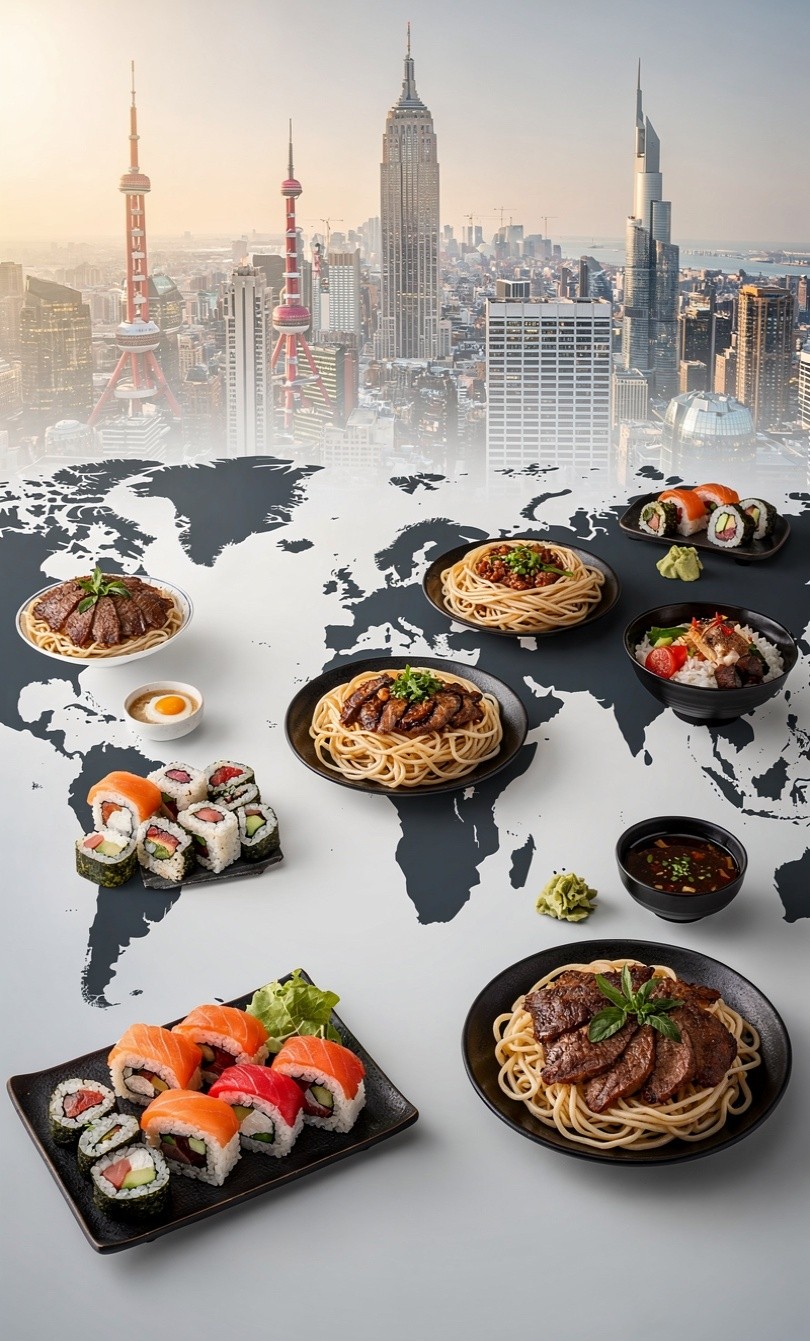
Inside the billion-dollar rise of Japanese restaurant chains dominating global dining
Global Japanese Restaurants Making Revenue Billion Dollars Are Reshaping the Food Industry
The modern restaurant industry has witnessed many food crazes, but few have exploded with the precision, profitability, and cultural influence of Japanese cuisine. What was once considered a niche dining experience reserved for metropolitan elites has transformed into one of the most powerful engines in the global hospitality economy. From conveyor-belt sushi in suburban malls to luxury omakase experiences inside five-star hotels, the rise of billion dollar Japanese restaurant chains has become one of the defining business stories of the 21st century.
Japanese restaurant chains are now among the fastest-growing segments in the global food industry
The numbers behind the movement are staggering. Analysts tracking global Japanese food revenue now place Japanese cuisine among the fastest-growing categories in international dining, powered by scalable franchising, obsessive operational efficiency, and the universal appeal of umami-driven comfort food. The world’s highest grossing Japanese restaurants are no longer isolated eateries in Tokyo or Osaka; they are multinational empires stretching across Asia, North America, Europe, and the Middle East, serving millions of customers every single day.
At the center of this culinary empire-building phenomenon are giants such as Zensho Holdings, the parent company behind Sukiya, alongside sushi powerhouses like Food & Life Companies and Kura Sushi. These companies mastered something the global food industry once thought impossible: industrializing authenticity without completely losing cultural identity. They fused robotics, supply-chain engineering, entertainment psychology, and disciplined Japanese hospitality into restaurant systems capable of generating billions in annual sales.
What makes this revolution even more remarkable is that it spans every price category imaginable. Affordable beef bowls served in under two minutes coexist within the same global ecosystem as celebrity-backed luxury sushi lounges charging hundreds of dollars per guest. The result is a Japanese restaurant economy that touches nearly every consumer demographic on Earth, and the next phase of this expansion may be even bigger than the first.
The Giants of Gyudon and Fast-Casual Supremacy
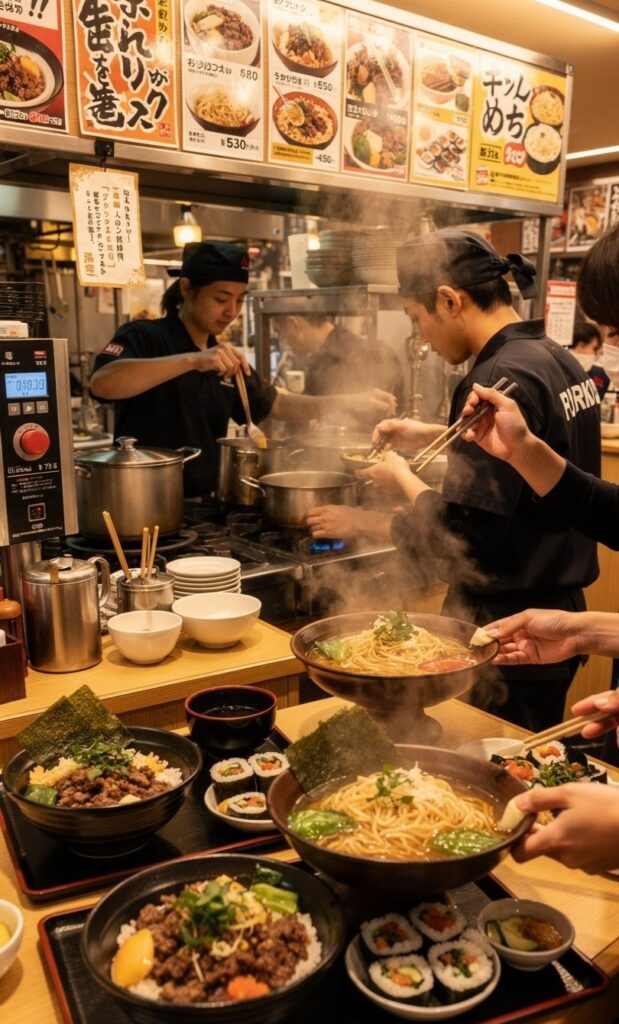
The clearest symbol of Japanese restaurant dominance begins not with sushi, but with a humble bowl of beef over rice. Few outsiders predicted that gyudon as a simple comfort dish deeply rooted in Japanese working-class culture would become the foundation for one of the largest restaurant empires on the planet, Yet that is precisely what happened when Zensho Holdings transformed its flagship brand Sukiya into a machine of relentless scale and efficiency.
Leading the charge among the top Japanese restaurant franchises, Zensho Holdings crossed the historic threshold of more than one trillion yen in annual revenue, a milestone that placed it among the most financially powerful food-service companies in Asia, what makes this achievement extraordinary is the company’s business model: inexpensive meals delivered at astonishing speed, powered by vertically integrated supply chains and sophisticated logistics networks that allow consistency across thousands of locations. Every bowl of gyudon represents a masterclass in operational economics, and that operational obsession became the blueprint for global expansion
Inside a typical Sukiya location, efficiency feels almost cinematic. Orders move rapidly through semi-automated kitchen systems, seating turnover remains extraordinarily high, and customers receive warm comfort food at prices designed to encourage habitual daily visits rather than occasional indulgence. This strategy turned affordability into an empire-building weapon, especially during periods of economic uncertainty when consumers worldwide began prioritizing value-driven dining experiences.
That same philosophy helped rival chain Yoshinoya Holdings maintain its status as one of the most recognized Japanese fast-food brands internationally. Yoshinoya, founded in the 19th century, expanded aggressively into the United States, China, and Southeast Asia by positioning gyudon as the Japanese equivalent of globally scalable comfort cuisine. The chain’s bright orange branding became synonymous with speed, consistency, and accessible Japanese flavors, introducing millions of first-time consumers to the category.
🌍 Curious how these restaurants became global giants?
Explore the business behind billion-dollar Japanese food empires:
→ Read the Full Industry Breakdown
The brilliance behind these companies lies in their ability to balance cultural familiarity with local adaptability. In Thailand, Indonesia, and the Philippines, menu modifications incorporate regional tastes while preserving the essence of Japanese dining discipline. In the United States, expanded late-night operations and drive-thru models helped Japanese fast-casual chains compete directly with burger giants. This hybrid strategy explains why discussions about how Japanese fast food conquered the world increasingly revolve around logistics innovation rather than purely culinary appeal.
Yet even as beef bowls became global staples, another Japanese dining format was preparing to completely reinvent the restaurant experience itself and it arrived on a conveyor belt.
The Revolving Sushi Revolution
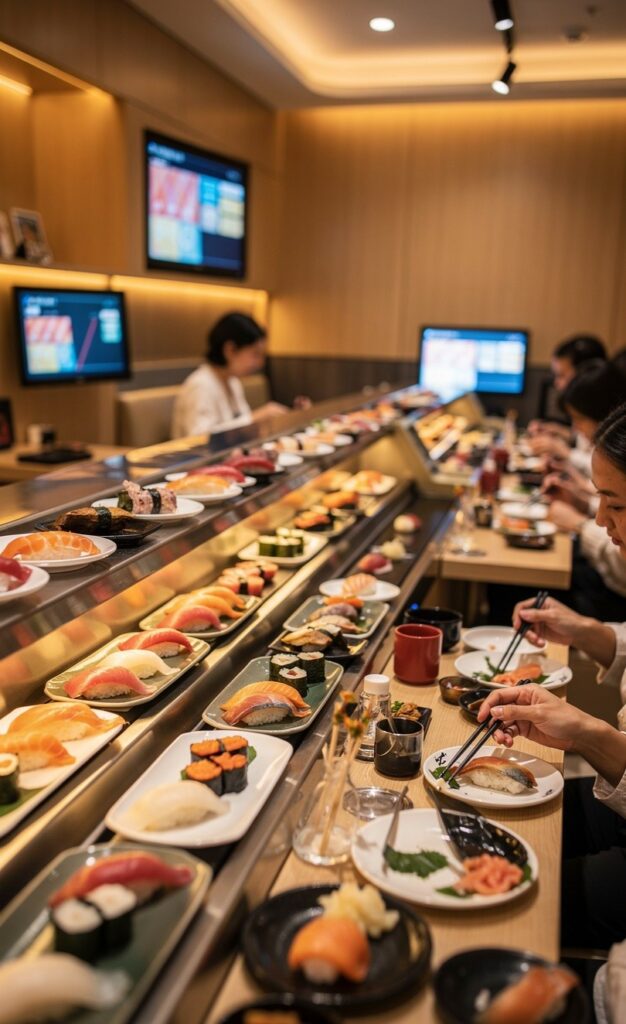
f gyudon chains mastered speed and volume, the world of kaiten-zushi mastered spectacle. Conveyor-belt sushi transformed dining into entertainment, and companies like Food & Life Companies, operator of the wildly successful Sushiro brand, elevated that concept into a billion-dollar international phenomenon.
Among the most profitable sushi chains globally, Sushiro Food and Life Companies engineered a restaurant ecosystem that feels closer to a technology platform than a traditional dining business. Guests enter brightly illuminated spaces where sushi circulates continuously across automated belts, digital ordering systems synchronize directly with kitchen robotics, and freshness algorithms monitor the movement of every plate. The experience creates a dopamine-driven dining rhythm that keeps customers ordering “just one more plate,” dramatically increasing average transaction sizes.
The genius of Sushiro lies in scale psychology. By keeping individual plate prices relatively low, the chain encourages repeat micro-purchases that collectively generate enormous revenue volume. Families, teenagers, office workers, and tourists all participate in a dining environment that feels playful rather than formal, which broadens the customer base far beyond traditional sushi enthusiasts.
Meanwhile, Kura Sushi pushed the entertainment dimension even further. Its famous plate-counting reward systems gamified the dining process, transforming meals into interactive experiences where customers earn animations, prizes, and collectible items after consuming a certain number of plates. This innovation proved especially powerful with younger demographics and families, turning restaurant visits into social events rather than simple transactions.
🤯 Want to see where these food habits come from?
Explore the restaurants and culture behind Japan’s global food influence
:→ Explore Top Japanese Restaurants
The ongoing Kura Sushi market expansion demonstrates how aggressively Japanese restaurant chains brands are pursuing international dominance. In the United States, the chain invested heavily in AI-assisted kitchen systems, automated freshness domes, and labor-saving technologies designed to offset rising operational costs. Customers simultaneously perceive these innovations as futuristic enhancements, allowing the brand to frame automation as part of the entertainment value rather than merely a cost-cutting measure.
This technological integration gives Japanese restaurant chains a massive strategic advantage in an industry increasingly threatened by labor shortages and inflationary pressures. Conveyor-belt sushi restaurants can serve enormous customer volumes with fewer employees than many Western casual-dining competitors, while maintaining remarkably consistent product quality. The operational math behind the model is so compelling that restaurant analysts now study Japanese sushi chains as case studies in hospitality automation.
Yet not every billion-dollar Japanese restaurant chains empire relies on affordability and high-volume traffic. Some thrive by turning exclusivity itself into the product.
High-End Experiential Masterpieces
At the opposite end of the spectrum from conveyor belts and fast-service counters stands a completely different category of Japanese dining empire: the luxury experiential ecosystem. Here, the economics depend not on volume alone, but on atmosphere, prestige, celebrity alignment, and theatricality. Few brands embody this model more successfully than Nobu Hospitality.
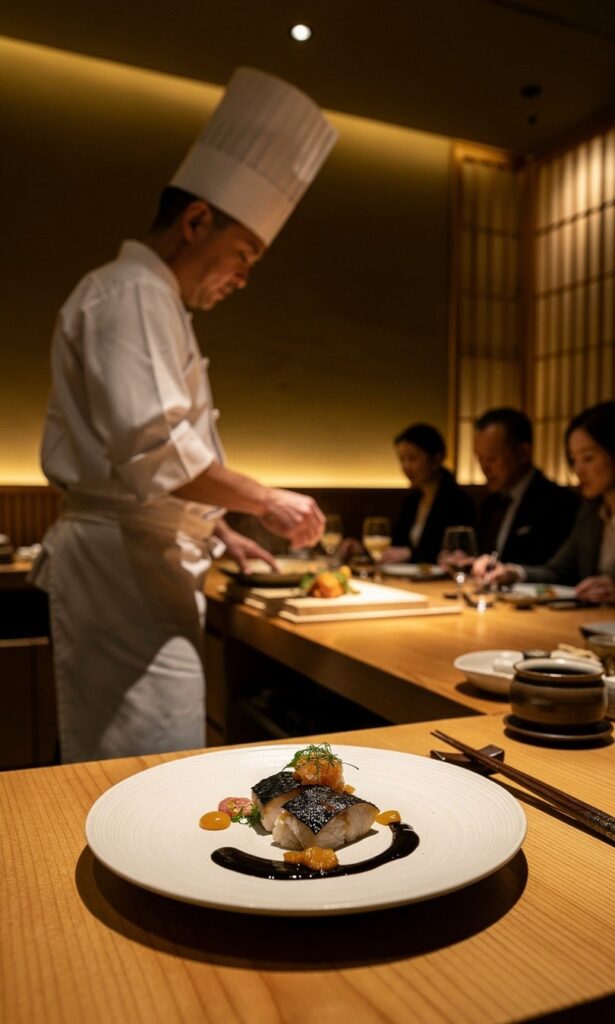
Founded with the culinary vision of celebrity chef Nobu Matsuhisa and amplified by Hollywood partnerships involving Robert De Niro, Nobu transformed premium Japanese dining into a global luxury lifestyle brand. The company expanded beyond japanese restaurant chains into hotels, residences, and elite nightlife experiences, creating an ecosystem where dining becomes only one component of a larger aspirational identity.
The brilliance of the premium experiential Japanese dining market lies in its emotional economics. Customers are not simply purchasing sushi; they are buying exclusivity, social status, and curated ambiance. Signature dishes such as black cod miso became globally recognized luxury symbols, while carefully designed interiors fused minimalist Japanese aesthetics with cosmopolitan glamour.
A similar theatrical formula fueled the success of Benihana, which pioneered performance-based dining decades before experiential hospitality became a global trend. Benihana chefs transformed cooking into live entertainment through knife tricks, flaming onion volcanoes, and interactive communal seating. That theatricality dramatically increased customer retention while differentiating the brand from conventional restaurants.
Then there are hybrid luxury concepts like SUSHISAMBA, which blend Japanese culinary foundations with Latin American energy and nightlife aesthetics. These venues generate massive revenue not only through dining, but through premium cocktails, celebrity events, and high-margin social experiences that extend far beyond food itself.
What unites all of these brands is their understanding that modern consumers increasingly seek memorable experiences rather than transactional meals. Japanese restaurant chains groups excel at designing environments where architecture, presentation, precision, and storytelling become inseparable from the cuisine itself and that mastery continues to push revenues higher.
The Future of Global Japanese Food Franchises
The rise of Japanese restaurant chains empires reveals something profound about the future of global dining: the most successful food companies are no longer simply restaurant operators. They are technology firms, entertainment platforms, logistics specialists, and cultural exporters operating simultaneously under one brand identity.
The world’s highest grossing Japanese restaurants succeeded because they mastered an extremely difficult balancing act. They preserved enough authenticity to maintain cultural credibility while embracing enough automation and localization to scale globally. This fusion of tradition and industrial precision allowed Japanese chains to expand across radically different markets without completely diluting their identity.
The next stage of growth may become even more aggressive as robotics, AI-driven kitchens, predictive inventory systems, and cashless dining platforms mature further. Japanese restaurant groups already lead much of the industry in automation adoption, and that advantage could widen dramatically as labor shortages continue affecting hospitality sectors worldwide.
There is also growing evidence that Japanese cuisine still has untapped international potential beyond sushi and ramen. Regional specialties such as Japanese curry, katsu sandwiches, yakitori, and even convenience-store-inspired dining concepts are beginning to attract serious investor attention. The same operational discipline that turned gyudon and conveyor-belt sushi into global empires could eventually scale entirely new categories into the next generation of billion dollar Japanese restaurant chains.
For now, however, the current leaders continue redefining what modern restaurant empires look like. Whether through a low-cost beef bowl served in under two minutes or a luxury omakase experience overlooking a glittering skyline, Japanese restaurant brands have proven that culinary precision can evolve into one of the most powerful business models in global hospitality and the rest of the food industry is still racing to catch up.
Why are Japanese restaurant chains so successful?
They combine automation, efficiency, and globally appealing flavors with strong operational systems.
Which is the largest Japanese restaurant company
Zensho Holdings is among the largest, generating over one trillion yen annually
What is kaiten sushi?
Kaiten sushi is a conveyor-belt system where customers pick sushi plates directly as they circulate.
Is Japanese cuisine growing globally?
Yes, it is one of the fastest-growing segments in international dining.
🍜 Curious about global food trends?
Explore how Indian cuisines are dominating worldwide dining habits
- 7 Viral Ice Cream Recipes Taking Over Kitchens in 2026 (Easy & Trending)
- Trending South Korean Healthy Foods Going Viral in USA 2026
- How Japanese Restaurant Chains Built Billion-Dollar Food Empires
- Vegetarian Tom Yum Soup: History, Variations & Authentic Thai Flavors
- The $86.91 Billion Scoop: The 10 Ice Cream Recipes Dominating Global Market